




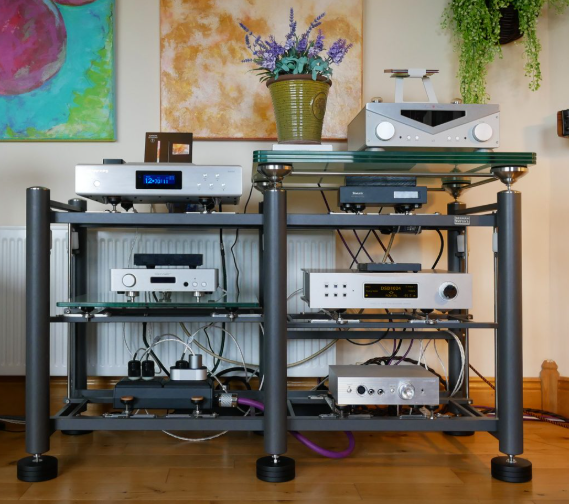
Why racks need isolating
A lot of isolation conversations start and end at the speakers. That’s for good reason: a loudspeaker is the most energetic source of vibration in most rooms, and getting it decoupled from the floor is the first and most important thing any system can do.
But it isn’t the only structural connection carrying vibration around a room. Every piece of equipment on a rack is also connected to that same floor, through the rack’s own legs or feet, and that connection is a second, quieter path for the same problem. It’s a route many of our customers have already taken, and one we take ourselves; our own Solid Sounds rack is isolated the same way whenever we’re set up at Hi-Fi shows and in our office setup.
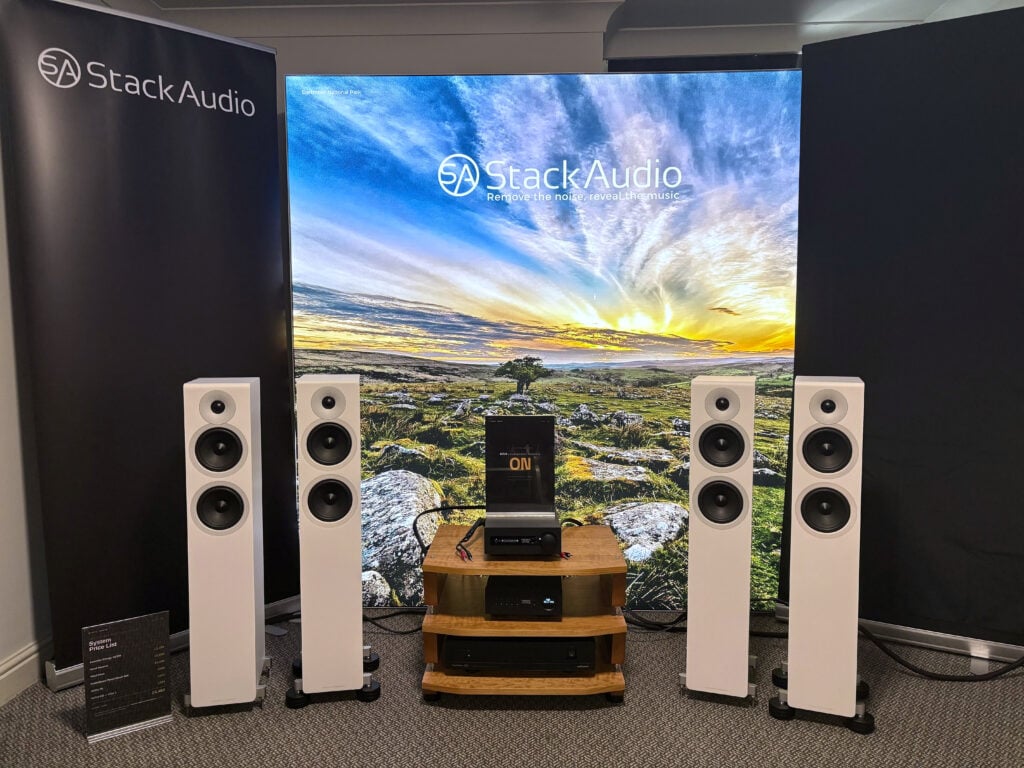
We recently utilised the AUVA 50s beneath the rack in our system for the North West HiFi show.
Why a rack isn’t like your electronics
We’ve written elsewhere about why individual components- DACs, streamers, amplifiers- benefit from controlled compliance rather than rigidity: they have no driver, so there’s no fixed mechanical reference to protect, and their real vulnerability is microphony, where vibration reaching sensitive circuitry gets converted into an unwanted electrical signal. A rack doesn’t have that vulnerability. It isn’t a transducer. Nothing inside a rack’s structure turns mechanical movement into an electrical signal, so there’s no microphony risk to design around.
What a rack does share with a loudspeaker is a genuine need for rigidity. A tall, loaded structure carrying a vast amount of equipment benefits from a stable, fixed connection to the floor in exactly the way a cabinet does, a rack that can rock or flex is a rack that’s letting go of its own reference, for the shelves and everything sitting on them. That’s the same underlying requirement the AUVA Loudspeaker Isolators were built to satisfy, and it’s why they’re the right tool for the job here rather than the EQ’s compliant construction, which is solving a problem the rack doesn’t have.
Rigid isn’t the same as undamped
It’s worth being precise about why this works, because “rigid” and “undamped” aren’t the same thing, and it’s easy to conflate them. A plain spike is solid metal end to end, nothing inside it to absorb anything, so every bit of vibration reaching it passes straight through in both directions. That’s a real leak: floor-borne vibration travels up into the rack unchanged, and vibration generated within the rack structure travels down into the floor unchanged.
The AUVA isolators aren’t built that way. Inside each rigid shell sits the same particle-damping technology used throughout the AUVA range: loose particles that collide, converting kinetic energy into heat as vibration passes through them. The shell’s rigidity governs stability; it’s what keeps the rack’s reference fixed. The particles inside govern dissipation; they’re what stops vibration passing through in either direction. The two properties aren’t in tension. A rack sitting on AUVA isolators gets the stability a rigid mount provides, without the free pass a plain spike gives vibration to travel straight through.
A layered approach, not a single fix
This is where isolating the rack fits into a wider picture rather than standing alone. Speaker isolation deals with vibration at its most energetic source; a driver moving air is, mechanically, the loudest thing happening in most rooms, so decoupling speakers from the floor is the highest-value single change most systems can make. But it’s rarely the only vibration path in the room. Footfall, room resonance, and energy from a subwoofer or a second system sharing the same floor can all still reach a rack that’s sitting directly on it; and from there, straight into every component on every shelf at once.
Isolating the rack itself addresses that second path. Isolating individual components on top of an already-isolated rack, using the AUVA EQ, addresses whatever residual vibration still makes it through both of the first two layers, or vibration a component generates internally through its own transformer or fan. Each layer is solving a different, specific leak; none of them substitutes for the others.
What this looks like in practice
Our own team has used exactly this approach in-house since the AUVA range launched, and has increasingly recommended it to customers running heavier setups. As it was put when suggesting the approach to one reviewer: “isolating a rack is vital to negate any remaining floor-borne vibration” and to protect the equipment sitting on it.
That advice held up under a genuinely demanding test. One independent reviewer fitted six AUVA 100 isolators beneath an already high-end, heavily engineered equipment rack; a large, double-wide structure already regarded as a strong performer in its own right, previously sitting on its stock spiked feet. Despite the rack already being a serious piece of isolation engineering before the AUVA isolators were added, the reviewer described a clear, repeatable change in tonal character once the rack itself was decoupled from the floor, not something subtle enough to dismiss, and not something they expected going in, given how much isolation the rack was already providing on its own.
Sizing for a rack
All AUVA Loudspeaker Isolator variants support up to 275kg per set of feet, regardless of size. What varies is absorption capacity: the AUVA 50 has two particle cells, the 70 has three, and the 100 has five plus a central particle-filled chamber, so the larger variants dissipate more vibration rather than simply carrying more weight.
The right choice for a rack comes down to scale rather than raw weight. A smaller rack carrying a modest amount of equipment is a smaller structure with less going on, and the AUVA 50 generally suits it well. A large, multi-tier rack fully loaded with equipment is a different proposition; more components means more internally generated vibration for the rack to deal with, and a larger footprint means more structure across which that vibration can travel. Hence, the greater absorption capacity of the AUVA 70 or 100 earns its place here. As with speakers, fitting is via threaded bolts into the rack’s own feet, with a choice of felt pads for hard floors or carpet spikes where needed.
The Bottom Line
Speaker isolation earns its place first; it’s dealing with the most energetic vibration source in the room. But the floor doesn’t stop being a shared connection once the speakers are off it, and a rack sitting rigidly on spikes is still a direct path for whatever vibration remains. The AUVA Loudspeaker Isolators do for a rack exactly what they do for a cabinet: hold it rigid where rigidity is needed, while dissipating the vibration that rigidity alone would otherwise let straight through.
We can’t tell you how any of this will sound in your system, nobody honestly can. But customers most often tell us they hear a genuine, additional improvement once the rack itself is addressed, even in systems where the speakers were already well isolated. And if you’d rather test that against your own ears than take our word for it, that’s what the 60 days are for. You’ll hear a difference, or your money back.
Critic feedback – Rack Isolation
Srajan from 6 moons tested out the AUVA 100s with his rack. Read more here: https://6moons.com/audioreview_articles/stack-audio-rack-use/
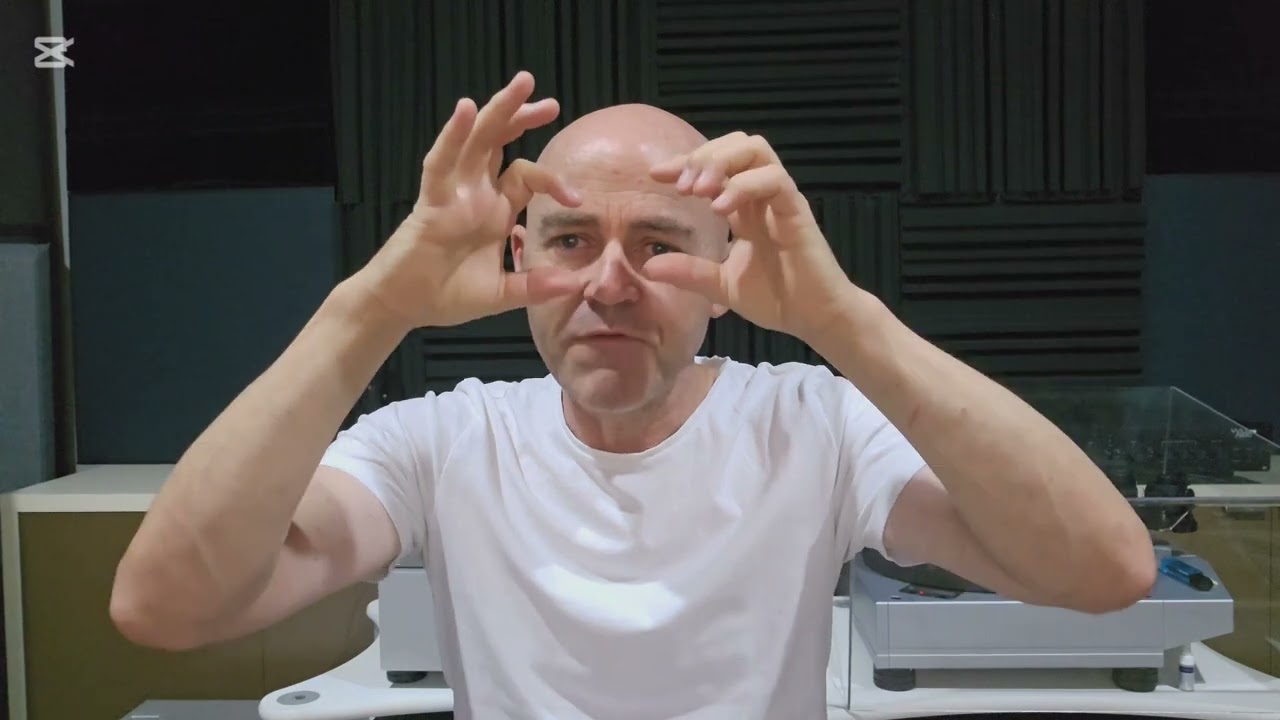
Watch ‘An Aussie Audiophile’ Isolate his rack with the AUVA 100s.

 EN
EN  DE
DE  NL
NL  FR
FR  JA
JA  PT
PT  ES
ES  SV
SV  IT
IT  FI
FI